


DUNU Titan X — A Lively Budget IEM With Some Rough Edges

Pros
Semi‑cohesive overall sound
Good bass density
Clear midrange
Controlled treble (no harsh peaks)
Natural timbre and believable note weight
Musical and engaging presentation
Comfortable fit and excellent build for the price
Cons
Midrange is unbalanced
Upper mids are too forward and aggressive
Can get harsh on certain recordings
Lower mids have more body than upper mids
Bass bleed into lower mids
Bass is not clean; can sound blurry
Sub‑bass lacks rumble and depth
Limited bass detail
Technical performance is modest
Lower treble is thin
Upper treble rolls off and sounds stuffy
Treble may feel too “safe” or muted for some
Not forgiving of poor recordings
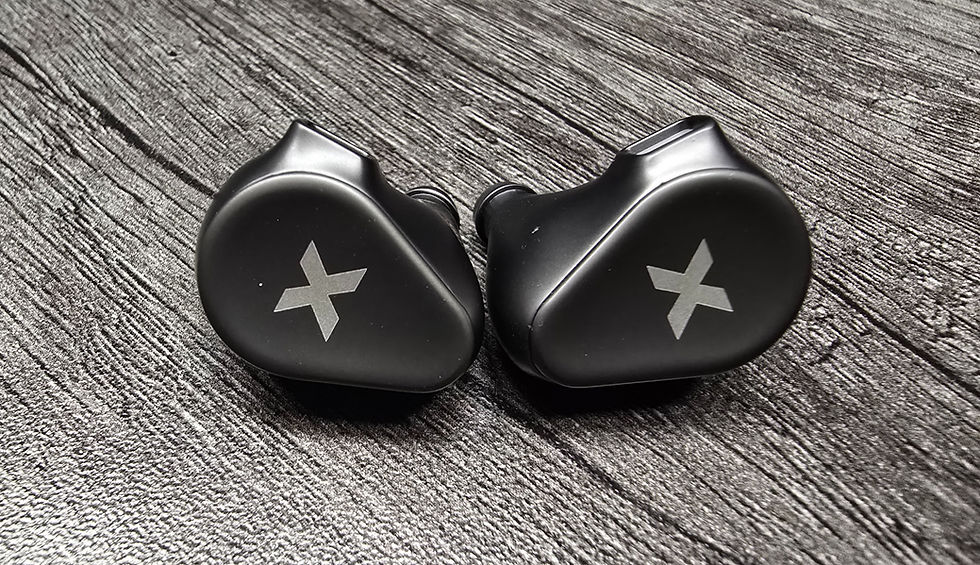
The DUNU Titan X enters the ultra‑budget space at $35, aiming to deliver a musical, engaging sound wrapped in a surprisingly premium build. It succeeds in several areas, but its tuning choices and modest technical performance keep it from being the “safe” everyday IEM it could have been. Instead, the Titan X leans expressive, energetic, and occasionally aggressive — a tuning that will appeal to some listeners but not all.
Before we go any further, I want to thank HifiGo for providing the DUNU Titan X for review — much appreciated.
This review covers the 3.5mm Standard Version (no DSP, no microphone). A USB‑C DSP version is also available.
The DUNU Titan X will set you back $35.
Specifications
Driver Configuration: Dual‑magnetic‑circuit + dual‑chamber dynamic driver
Diaphragm: High‑rigidity dome + flexible surround composite
Frequency Response: 5 Hz – 40 kHz
Impedance: 16 Ω
Sensitivity: 123 dB/Vrms @ 1 kHz
THD: <0.3% @ 1 kHz
Shell Material: High‑density alloy
Cable: 4‑strand high‑purity silver‑plated OCC copper
Connector: 0.78mm 2‑pin
Box
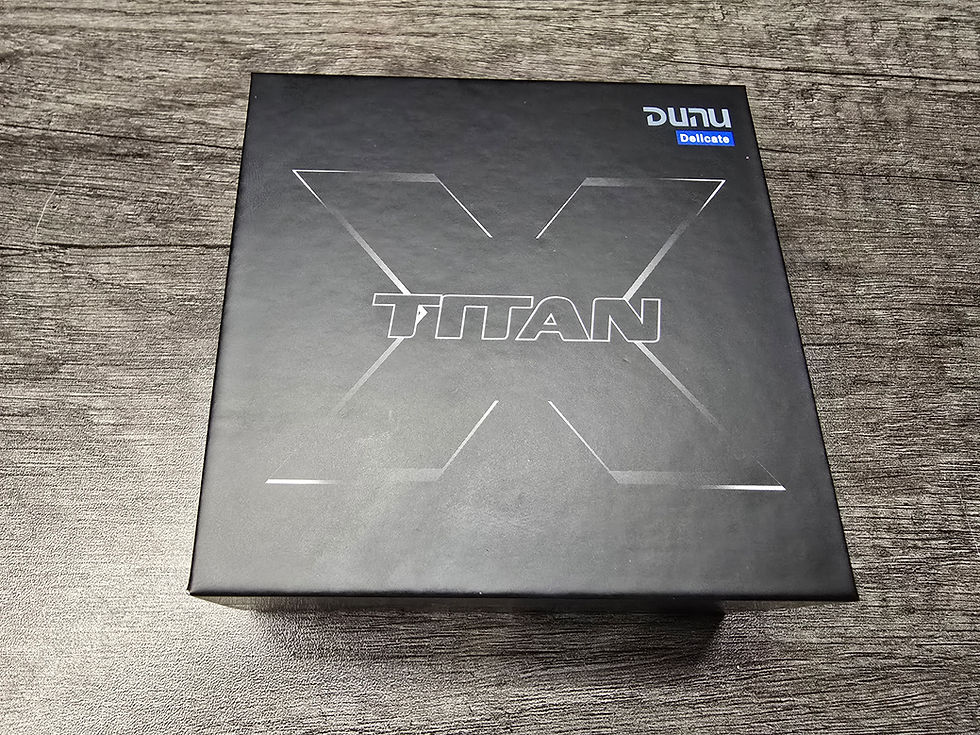

The box is nothing special — a simple black package with the Titan X logo on the front and the specs printed on the back. You also get the obligatory Hi‑Res Audio sticker, so it’s gotta sound good.

For the price, the unboxing experience is perfectly acceptable. Nothing fancy, nothing wasteful — just straightforward and functional.
Accessories

DUNU includes a surprisingly solid accessory kit for a $35 IEM.
Inside the box you get:


A fabric carry bag (no hard case)
A cleaning tool for those days you forget to use a Q‑tip
2-pin cable
Three full sets of silicone tips, each in S/M/L:
Black olive‑shaped tips with red stems
Wide‑bore grey tips
DUNU Candy tips
Fit-wise, the olive‑shaped black tips didn’t seal well for me. The wide‑bore grey tips fit decently but sat a bit shallow. The Candy tips ended up fitting me the best.
Sound-wise, tip changes didn’t dramatically alter the tuning — the Titan X stays fairly consistent regardless of which set you choose.
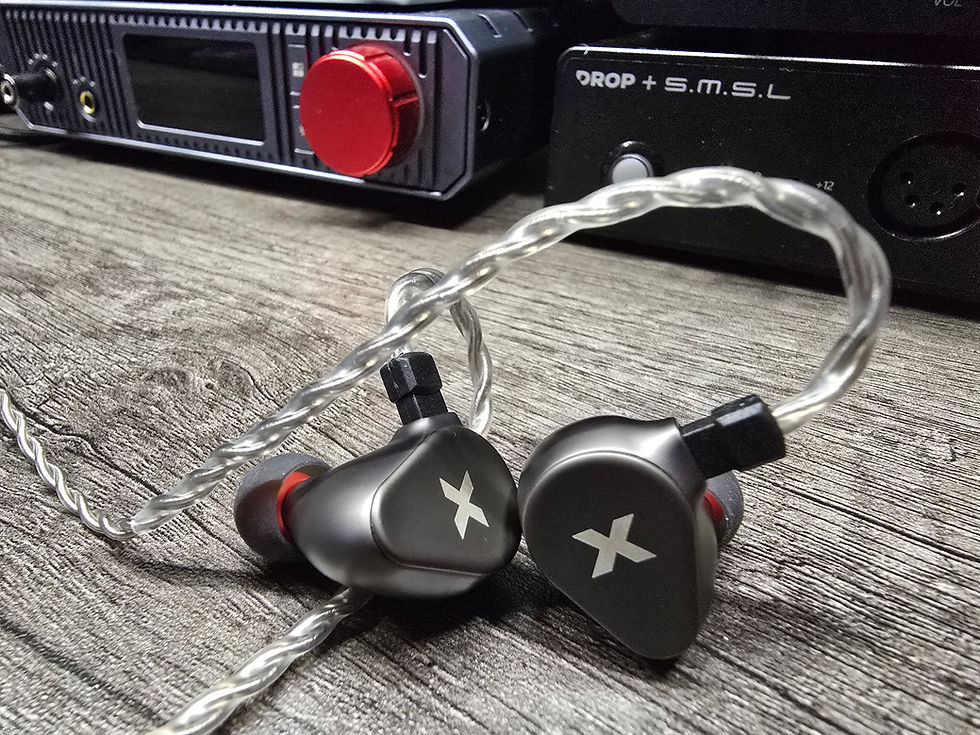
The 2-pin cable is very good for a budget IEM. It is lightweight, has a soft ruber texture that is well controlled. The ear hooks have enough tension to keep the Titan X secure around the ears.
Build, Fit & Isolation
The Titan X is exceptionally well built for the price. A full metal shell at $35 is rare, and DUNU executes it well. The housings are compact, smoothly contoured, and lightweight. The nozzle length is just long enough to secure a proper seal without causing pressure or discomfort.


Comfort is excellent — I can wear the Titan X for several hours without fatigue or hotspots.
Isolation is decent for a vented dynamic driver. It blocks typical room noise and conversations, but louder household sounds are only moderately muffled. Roughly 55% of outside noise is reduced.
Source Pairing
The Titan X is easy to drive and consistent across sources. It sounded similar on everything I paired it with — a good sign. Warmer sources made it slightly warmer, but no major shifts occurred.
Gear used:
Mytek Liberty DAC II
xDuoo XA‑02
SMSL DS20
Questyle Sigma
Periodic Audio Rhodium
Hiby FC3
Fosi Audio DS2
Sound Impressions

The Titan X aims for a musical, mid‑forward presentation with controlled treble and decent note weight. But the upper‑mid and lower‑treble emphasis pushes the sound into a more aggressive, excitable territory than the rest of the tuning suggests. It almost settles into safe mode — but not quite.
Bass
The bass has good density and impact, but it isn’t the cleanest. Mid‑bass carries weight, yet the leading edges are a bit blurry, and there is occasional bleed into the lower mids, softening clarity. Sub‑bass extension is limited — you get presence, but not true rumble or grumble. Texture and detail are modest.
Summary: Musical and full, but not deep, clean, or technical.
Midrange
This is where the Titan X becomes slightly unbalanced.
Lower mids have body and warmth.
Upper mids are too forward and aggressive, especially around 2–3 kHz.
This creates a split personality: weighty below, energetic above, but not cohesive.
On well‑recorded material, it can sound clear and lively. On hotter mixes, it becomes shouty, strained, or harsh, especially at higher volumes.
Summary: Clear but uneven, with an upper‑mid rise that dominates the presentation.
Treble
The treble has two distinct behaviors:
Lower treble: Energetic, sparkly, lively — but thin.
Upper treble: Rolls off early, making the top end sound stuffy, warm, and closed‑in.
This limits air, shimmer, and openness. The treble is controlled, but not extended.
Summary: Bright at the start, muted at the end — energetic yet lacking air.
Technical Performance
For $35, the Titan X is modest:
Stage width: Average
Stage depth: Shallow but not congested
Layering: Adequate
Imaging: Modest, not precise
Detail retrieval: Adequate but not analytical
Resolution: Good for the price, but blurry at times
Timbre: Mostly natural, but upper‑mid/lower‑treble emphasis can make notes sound forced or thin
Nothing is offensive, but nothing stands out either.
Summary: Competent but unremarkable technicalities.
Comparison: DUNU Titan X vs. DUNU Titan S2

The Titan X is not a budget Titan S2. There’s a hint of family resemblance in the mid‑forward energy, but the similarities end there.
The Titan S2 is superior in every way:
Fuller, more balanced, more cohesive tuning
Cleaner, tighter bass
Smoother, more natural mids
Better treble extension
Higher resolution, better detail, better imaging
More enjoyable and more refined overall
If you can afford the Titan S2, it is absolutely worth the upgrade.
Conclusion
For $35, the DUNU Titan X is a solid‑performing budget IEM with a musical foundation and a surprisingly premium build. But in my opinion, the tuning leans too expressive and excitable, with an upper‑mid/lower‑treble emphasis that keeps it from being the safe, balanced listen it could have been.
That said, the Titan X does have more pleasurable moments than unpleasant ones, and I often found myself enjoying it more than I expected. There’s a fun, lively character here that can be engaging with the right music. But for me, the forwardness added a bit too much excitement, and over time the sound felt unbalanced.
If you’re not sensitive to upper‑mid energy, the Titan X may hit the sweet spot of lively and enjoyable.
It’s a solid effort — but not a standout.
I am Dave the Honest Audiophile. Thanks for reading, and I’ll catch you in the next one.
Don’t forget to enjoy the music — and remember, honesty is the BEST policy.
If you want more honest, no‑hype audiophile content every week, head over to YouTube, hit that Subscribe button, and ring the notification bell so you don’t miss the next one.
Also, hit the thumbs up if you enjoyed this — or thumbs down if you didn’t. 🎧 Thanks for Watching
If you're into honest, no‑hype audiophile content, hit Subscribe and tap the 🔔 so you never miss a new video. 👍 Enjoyed this one? Give it a thumbs up — or a thumbs down if you didn’t. Either way, I appreciate the feedback.
🗣 About Me
I’m not a professional sound engineer, producer, or musician. I don’t do lab measurements or scientific testing. Everything I share comes from real‑world listening, personal comparisons, and a whole lot of reading and research.
I’ve volunteered as a sound tech in churches since my teens and have dabbled with recording, mixing, and mastering gear. These are simply my honest impressions — one audiophile’s perspective, shared with clarity and respect.
🛠 Quick Note About My Workflow
I write all my own impressions and evaluations. I use AI‑assisted editing tools only to help clean up wording and keep things clear, but every opinion and conclusion comes from my own listening and experience.
Stay grounded. Stay curious. Enjoy the music. And remember: Honesty is the Best Policy.
🌐 Connect With Me
Instagram: @thehonestaudiophile Twitter: @TalkDbs Discord: https://discord.gg/ZveuNxKxXY Website: https://thehonestaudiophile.com YouTube: https://www.youtube.com/channel/UCgMj7xJ1SDxGqqxZ5l3g_jg
📚 Learn More
Review Process: https://www.thehonestaudiophile.com/post/honest-audiophile-review-process Audio Terms & Definitions: https://www.thehonestaudiophile.com/post/the-honest-audiophile-s-terms-and-definitions-guide Reference Music List (2025): https://www.thehonestaudiophile.com/post/my-reference-music-tracks-2025-expanded-list Tier List Rankings: https://www.thehonestaudiophile.com/post/another-tier-list TIDAL Playlist: https://tidal.com/playlist/0a5604d1-f09e-47f3-9f77-f07efe926221
🎧 Recommended Gear
Audeze LCD‑5 Audio‑Technica R50x Audio‑Technica R70x Austrian Audio Hi‑X60 Audeze LCD‑2 Closed Back Westone Mach 60 Mytek Liberty DAC II Mytek Liberty THX HPA DROP SMSL HO150x DROP THX AAA One Linear
💡 Support the Channel
If you enjoy the content and want to help keep it going, consider supporting the channel. Every bit goes toward bringing in more gear for honest reviews.
PayPal: https://www.paypal.me/dbsylvia Venmo: @David-Sylvia-6 Join the Channel: https://www.youtube.com/channel/UCgMj7xJ1SDxGqqxZ5l3g_jg/join
📬 Contact: dbstechtalk@gmail.com


Comments