


Meze ASTRU - A Smooth, Warm, Polite Single Dynamic Driver That Never Steps Forward - Honest Audiophile Impressions


Introduction
Hi folks, Dave the Honest Audiophile.
This is the Meze Astru, and these are my Honest Audiophile impressions.
The Meze Astru is Meze’s latest entry into the single dynamic driver category, positioned at $900 and clearly intended to sit alongside the Alba and Advar as part of Meze’s design‑forward, lifestyle‑leaning IEM lineup. Meze has always focused on premium build, comfort, and a smooth, easy‑listening tuning philosophy, and the Astru continues that tradition — but at a significantly higher price point than its siblings.
At $900, expectations change. A single DD at this price needs to deliver standout timbre, standout dynamics, standout staging, and a level of technical performance that justifies the cost. It needs to compete with neutral monitors, hybrid cinematic performers, and even dual‑dynamic designs. It needs to offer something special.
So the question is simple:
Does the Meze Astru earn its place at $900?

Before we get into the nuts and bolts of the Meze Astru, I want to thank Meze Audio for providing the Astru for review — much appreciated, especially considering that I’ve had the Astru in longer than anticipated. Meze Audio, you rock.
Specifications
Driver Type: Dynamic
Driver Size: 10 mm
Sensitivity: 111 dB SPL/mW at 1 kHz
Impedance: 32 Ω
Frequency Range: 5 Hz – 35 kHz
THD: <0.1% at 1 kHz
Connector: 2‑pin
Weight: 13.4 g
Box & Contents

The Meze Astru arrives in a greyish‑black box with minimal branding.


Sliding off the outer sleeve reveals a book‑style box with a top tray for the IEMs, cable, and documentation.

Beneath that sits a foam insert containing:
Meze hard‑shell carry case
Soft carry pouch
5 sets of silicone tips (S/SM/M/ML/L)
4.4mm‑to‑3.5mm adapter
Carry Case/Pouch


The carry case is classic Meze: compact, durable, and lined with soft velvet. It’s small enough for a bag or large pockets and offers good protection.


The pouch is nicely built but is small and doesn't serve a purpose.
Tips

I tested many tips, including foam and longer cylindrical designs. Foam tips degraded the sound significantly, making the Astru murky and bloated. Most long‑stem tips sounded hollow or overly warm. The grey stock silicone tips provided the best seal and comfort without altering the tuning, and were used for all impressions.
Cable

The included 2‑pin 4.4mm terminated cable feels premium enough for the price.


The standout feature is the splitter design, which uses horn‑like guides to keep the left and right leads separated. It’s one of the best anti‑tangle splitters I’ve used.


There is a small 4.4mm to 3.5mm adapter built in the same manner. All in all, the cables are good — not exceptional, but solid. I fond that they had good ear hook tension and didn't tangle.
Build, Comfort & Isolation
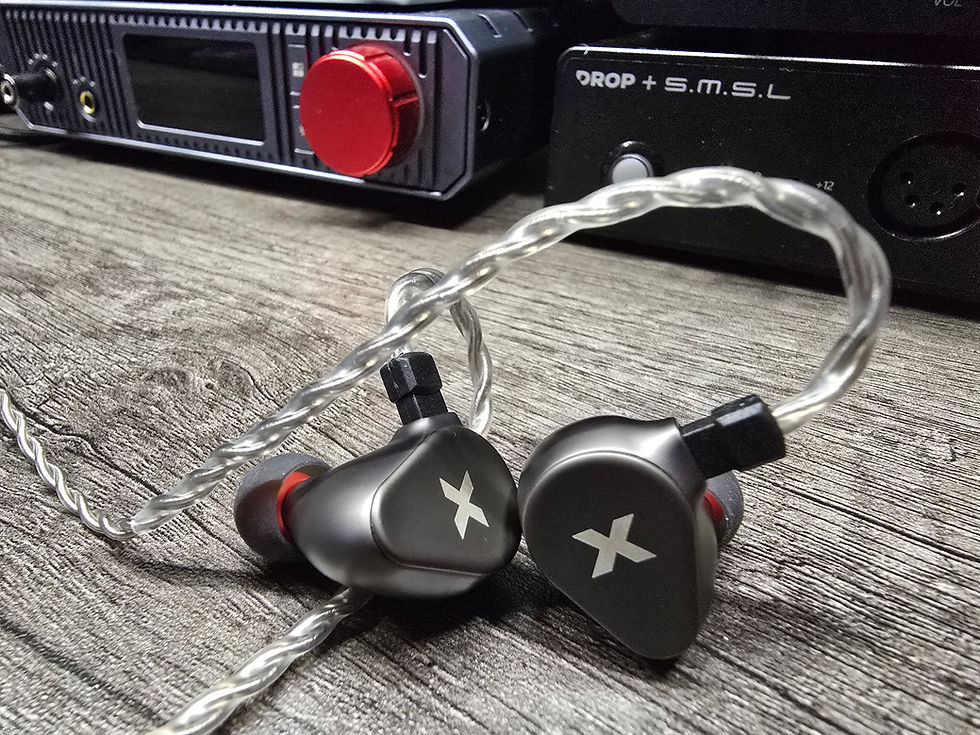
The Astru is unmistakably Meze. If you’ve used the Alba or Advar, the design language will be familiar:
Titanium shell
Small indented faceplate
Central pinhole vent
Smooth, stepped back
Very shallow nozzle


Fit & Comfort


The shallow nozzle is the biggest challenge. The Astru simply doesn’t sit deeply or the most securely in my ears. Foam tips were unusable due to sound degradation, and most third‑party tips altered the tuning negatively.
With the grey stock tips, I achieved the best seal — but comfort remained inconsistent. I found myself adjusting the fit every 10 minutes.
Isolation
Average at best. Roughly 50% of outside noise is muffled due to my fit and seal issues.
Source Pairing
The Astru is easy to drive. Sensitivity and impedance allow anything — dongles, DAPs, desktops — to get them loud effortlessly.
However, source synergy matters:
Neutral / analytical sources: best pairing; add air and energy
Warm sources: overly thick, overly warm, lacking sparkle and openness
Sound Impressions
The Meze Astru is a pleasant, smooth, warm, safe‑tuned single DD that never does anything wrong — but never does anything special.
Bass
Full but softened
Rounded attack, reduced definition
Lacks impact
Timpani and low brass lack physicality
Bass guitar lines present but not textured
More “comfortable warmth” than “accurate foundation”
Overall: Pleasant bass, but not competitive at $900; lacks DD authority and hybrid scale.
Midrange
Warm, smooth, padded
Upper‑mid presence softened
Vocals lack bite, clarity, emotional intensity
Brass and strings lose natural edge
Coherent but not expressive
Safe tuning reduces realism and dynamic contrast
Overall: Relaxed and pleasant, but too polite to be reference‑grade.
Treble
Brilliance dip reduces presence after 8k-13k
Upper‑treble after 13k lift creates floaty, cosmetic air
Controlled but lacks expressiveness
High strings and cymbals are softened for politeness
Lowers natural shimmer for safeness
Extension present but not integrated, safe and polite tuning
Overall: Safe treble tuning; non‑fatiguing but not overly accurate or revealing.
Stage Width
Moderate width
Smaller close to intimate depth
Lacks cinematic expansion
Feels like a small hall
Overall: Cohesive but not expressive; insufficient scale for the price.
Depth
Softened depth
Compressed front‑to‑back layering
Orchestral sections blend
Lacks dimensionality
Overall: Comfortable depth, but not realistic or reference‑level.
Layering
Layers blend on complex tracks
Complex passages lose clarity
Instruments occupy similar planes
Safe tuning reduces stratification
Overall:: Smooth but not technically strong
Imaging
Coherent but not precise
Soft localization
Instrument placement lacks stability
Not pin-point precision accuracy but close
Overall: Fine for casual listening, not for reference evaluation.
Detail Retrieval
Lower detail than all comparison units
Micro‑details softened
Quiet passages lose nuance
Upper‑mid smoothing hides some information
Overall: Adequate detail retrieval, not going to miss anything important
Resolution
Moderate resolution
Softened harmonics
Rounded transients
Competitors deliver more clarity
Overall: Pleasant but not resolving at higher level
Tone
Natural but warm‑colored
Lacks neutrality
Harmonics softened
Brass and strings lose realism
Woodwinds padded
Overall: Tonally pleasant, but not the most accurate.
Timbre
Natural‑ish but softened
Lacks DD bite and note density
Harmonics underdeveloped
Lacks lifelike reproduction
Overall: Good timbre for casual listening, not for reference work.
Comparisons
Tanchjim Origin — $250
More open and airy
More expressive
More natural tone and timbre
More bite and crispness
Better detail and resolution
Wider and deeper stage
More realistic dynamics
DUNU DN242 — $350
More neutral and natural
More impact, depth, layering
More separation and control
More air and openness
Better detail and resolution
More accurate timbre
ThieAudio Oracle MK3 — $590
More expressive
More impactful bass
Airier, more controlled mids and treble
Wider, deeper, more layered stage
More precise imaging
Better detail and resolution
More natural tone and timbre
UM Stardust — $800
More neutral and natural
More detailed and resolving
More impactful
Deeper, layered stage
More precise imaging
More expressive
Spirit Torino Twin Pulse Beryllium — $1,752
Far more powerful, textured, controlled bass
More dynamic slam, punch, emotional impact
More natural, spotlighted midrange
More extended, airy, crisp treble
Far wider, taller, deeper stage
Laser‑precise imaging
Superior depth and layering
More realistic timbre
Higher detail and resolution
Conclusion
The Meze Astru is not a bad IEM. It’s pleasant, smooth, warm, and easy to listen to. It never offends, never shouts, never bites, and never fatigues. It’s the kind of tuning that works for casual listening, background music, and long sessions where comfort and politeness matter more than accuracy or engagement.
But at $900, pleasant isn’t enough.
The Astru simply does not compete in its price class — and it struggles against sets that cost half, or even a third, of its asking price. The shallow nozzle makes fit inconsistent, isolation is average, and the safe tuning philosophy results in a presentation that is too padded, too polite, and too non‑committal to be considered reference‑grade or performance‑grade.
Across every category — bass, mids, treble, stage, depth, layering, imaging, detail, resolution, tone, timbre — the Astru is outperformed convincingly by:
Tanchjim Origin ($250)
DUNU DN242 ($350)
ThieAudio Oracle MK3 ($590)
UM Stardust ($800)
Spirit Torino Twin Pulse Beryllium ($1,752)
Each of these IEMs brings a clear identity, a clear purpose, and a clear level of technical performance. The Astru does not. It plays everything safe, and in doing so, it never steps forward and does anything special.
At $900, the Astru is a tough sell. There are many other options that offer tunings and technical performance that feel genuinely “special.”
If you enjoy Meze’s aesthetic, build quality, and relaxed tuning philosophy, the Astru may appeal to you as a luxury comfort‑tuned single DD. But if you’re looking for neutrality, naturalness, dynamic authority, technical performance, or reference accuracy, there are far better options at every price point.
The Meze Astru is smooth, warm, and polite — but it is not a competitive IEM. It’s a safe bet, not a standout.
I am Dave the Honest Audiophile. Thanks for reading, and I will catch you in the next one.
Don't forget to Stay grounded. Stay curious. Enjoy the music.
And remember: Honesty is the Best Policy.
If you want more honest, no-hype audiophile content every week, head over to YouTube, hit that Subscribe button and ring the notification bell so you don't miss the next one.
Also, hit the thumbs up if you enjoyed this or thumbs down if you didn’t.
🗣 About Me
I’m not a professional sound engineer, producer, or musician. I don’t do lab measurements or scientific testing. Everything I share comes from real‑world listening, personal comparisons, and a whole lot of reading and research.
I’ve volunteered as a sound tech in churches since my teens and have dabbled with recording, mixing, and mastering gear. These are simply my honest impressions — one audiophile’s perspective, shared with clarity and respect.
🛠 Quick Note About My Workflow
I write all my own impressions and evaluations. I use AI‑assisted editing tools only to help clean up wording and keep things clear, but every opinion and conclusion comes from my own listening and experience.
Stay grounded. Stay curious. Enjoy the music.
And remember: Honesty is the Best Policy.
🌐 Connect With Me
Instagram: @thehonestaudiophile
Twitter: @TalkDbs
Discord: https://discord.gg/ZveuNxKxXY
Website: https://thehonestaudiophile.com
📚 Learn More
Audio Terms & Definitions: https://www.thehonestaudiophile.com/post/the-honest-audiophile-s-terms-and-definitions-guide
Reference Music List: https://www.thehonestaudiophile.com/post/my-reference-music-tracks-2025-expanded-list
Tier List Rankings: https://www.thehonestaudiophile.com/post/another-tier-list
TIDAL Playlist: https://tidal.com/playlist/0a5604d1-f09e-47f3-9f77-f07efe926221
🎧 Recommended Gear
Audeze LCD‑5
Audio‑Technica R50x
Audio‑Technica R70x
Austrian Audio Hi‑X60
Audeze LCD‑2 Closed Back
Westone Mach 60
Mytek Liberty DAC II
Mytek Liberty THX HPA
DROP SMSL HO150x
DROP THX AAA One Linear
💡 Support the Channel
If you enjoy the content and want to help keep it going, consider supporting the channel. Every bit goes toward bringing in more gear for honest reviews.
PayPal: https://www.paypal.me/dbsylvia
Venmo: @David-Sylvia-6
Join the Channel: https://www.youtube.com/channel/UCgMj7xJ1SDxGqqxZ5l3g_jg/join
📬 Contact: dbstechtalk@gmail.com
🛒 Affiliate Links
Drop: https://drop.com/home?ranMID=50354&ranEAID=4pEFW3GzSkg&ranSiteID=4pEFW3GzSkg-qiY5vnpC3ls1112R8CFKog
Apos Audio: https://apos.audio?sca_ref=45218.8XN5h6dArS

Comments